Sustainability and economic evaluation of non-metallic fiber and reed fiber concrete materials in Belarus
Authors
Files
Key Information
Journal
Published in Vol. 1 No. 3 (2026) of Sustainable Management Review.
Sustainable Management Review (SMR) is a multidisciplinary, peer-reviewed international journal dedicated to advancing research on sustainable management and sustainable development across disciplines. SMR welcomes sustainability-oriented studies from diverse academic fields, including but not limited to economics and management, public administration, culture, education, sociology, communication, law, environmental studies, biology, chemistry, materials science, engineering, water resources management, and other STEM-related areas. The journal encourages scholars to examine the application, transformation, and development of sustainability principles from organizational, social, technological, ecological, and institutional perspectives, thereby providing theoretical support and practical insights for more responsible, resilient, and future-oriented models of management and development.
ISSN3106-5805 eISSN3106-5813
About the JournalAbstract
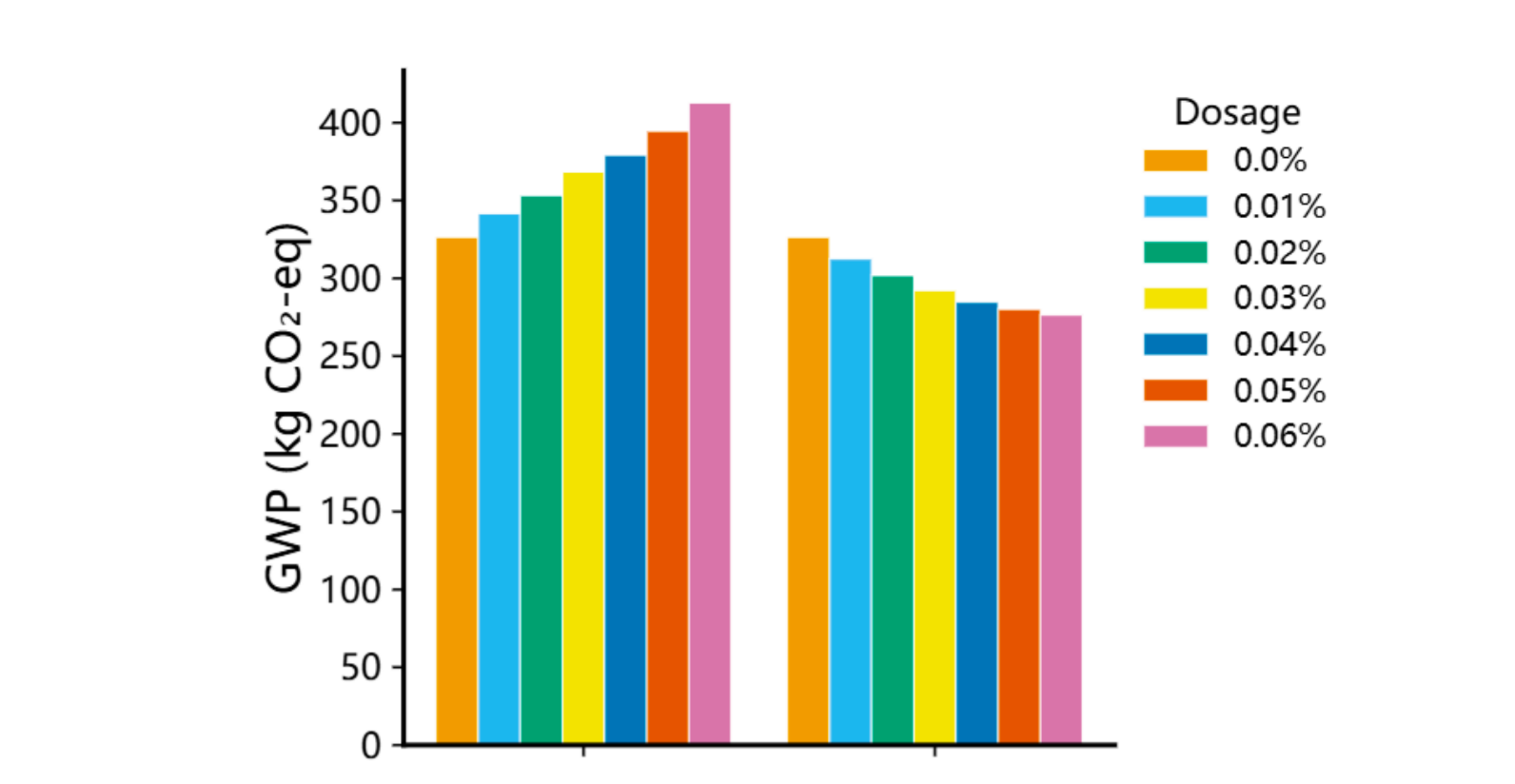
To address the issues of weak tensile strength, susceptibility to nanocracks, and insufficient durability in ordinary cement-based concrete, carbon nanofiber concrete and alkali-modified reed fiber concrete were prepared based on local Belarusian building material resources. The fiber content ranged from 0% to 6%. 28-day compressive and tensile mechanical tests were conducted. The environmental load of the two types of fiber-reinforced concrete was quantified using the ISO 14040/14044 Life Cycle Assessment (LCA) system. Durability performance was compared using data from dry-wet cycles, carbonation, and sulfate attack. Mechanical test results show that both types of fibers can improve the mechanical properties of concrete. At the optimal nanofiber content of 4%, the compressive failure load was 52.1 kN and the tensile failure load was 5.3 kN, representing increases of approximately 15% and 25% respectively compared to the baseline concrete. At the optimal reed fiber content of 4%, the compressive strength was 50.7 kN and the tensile strength was 5.9 kN, representing increases of approximately 10% and 17.5% respectively. Using 1 m³ of concrete as a functional unit, LCA (Limited Carbon Concrete) calculated the Global Warming Potential (GWP), Primary Energy Consumption (PED), and Acidification Potential (AP). Reed fiber significantly reduces life-cycle carbon emissions due to its plant carbon sequestration effect; nanofibers offer more prominent reinforcement, but their raw material preparation consumes more energy and has a higher environmental impact. Durability analysis shows that carbon nanofiber concrete exhibits superior fatigue resistance, erosion resistance, and carbonation resistance compared to reed fiber concrete. Reed fiber is a natural and renewable material with significant advantages in thermal insulation, energy saving, and low carbon emissions. Considering overall mechanical, durability, and environmental benefits, carbon nanofiber modified concrete is the preferred choice for high-durability, high-load-bearing projects; reed fiber concrete is suitable for low-carbon green civil buildings and thermal insulation projects, providing data support for the development and engineering application of sustainable fiber concrete in Belarus.
References
Konsta-Gdoutos, M. S., Metaxa, Z. S., & Shah, S. P. (2010). Highly dispersed carbon nanotube reinforced cement based materials. Cement and Concrete Research, 40(9), 1052–1059. https://doi.org/10.1016/j.cemconres.2010.04.013 DOI: https://doi.org/10.1016/j.cemconres.2010.02.015
Lawrence, J. G., Berhan, L. M., & Nadarajah, A. (2008). Elastic properties and morphology of individual carbon nanofibers. ACS Nano, 2(6), 1230–1236. https://doi.org/10.1021/nn800218t DOI: https://doi.org/10.1021/nn7004427
Mordlkovich, V. Z. (2003). Carbon nanofibers: A new ultrahigh-strength material for chemical technology. Theoretical Foundations of Chemical Engineering, 37(4), 429–438. https://doi.org/10.1023/A:1025788103579 DOI: https://doi.org/10.1023/A:1026082323244
Jaafer, B. S., Majeed, A. H., & Kadhim, M. J. (2020). Physical and mechanical properties of reed fiber cement board. In IOP Conference Series: Materials Science and Engineering (Vol. 928, No. 2, p. 022054). IOP Publishing. https://doi.org/10.1088/1757-899X/928/2/022054 DOI: https://doi.org/10.1088/1757-899X/928/2/022054
Machaka, M., Khatib, J., Baydoun, S., Elkordi, A., & Assaad, J. J. (2022). The effect of adding Phragmites australis fibers on the properties of concrete. Buildings, 12(2), 278. https://doi.org/10.3390/buildings12020278 DOI: https://doi.org/10.3390/buildings12030278
Cardinale, T., Arleo, G., & Bernardo, F. (2017). Investigations on thermal and mechanical properties of cement mortar with reed and straw fibers. International Journal of Heat and Technology, 35(1), 375–382. https://doi.org/10.18280/ijht.350150 DOI: https://doi.org/10.18280/ijht.35Sp0151
Shon, C. S., Mukashev, T., & Lee, D. (2019). Can common reed fiber become an effective construction material? Physical, mechanical, and thermal properties of mortar mixture containing common reed fiber. Sustainability, 11(3), 903. https://doi.org/10.3390/su11030903 DOI: https://doi.org/10.3390/su11030903
Naseri, M. (2022). Integrating life cycle assessment and machine learning for sustainable designs: A case study on protective layers made of mineral-bonded fiber-reinforced composites. Journal of Cleaner Production, 362, 132489. https://doi.org/10.1016/j.jclepro.2022.132489 DOI: https://doi.org/10.1016/j.jclepro.2022.132489
Patrisia, Y., & Gunasekara, C. (2025). Multi-perspective evaluation of waste-derived cellulose fiber concrete: Engineering performance, microstructure and sustainability. Sustainable Materials and Technologies, 46, e02512. https://doi.org/10.1016/j.susmat.2025.e02512 DOI: https://doi.org/10.1080/23789689.2025.2561203
Schultz, C., & Cunningham, P. R. (2025). Balancing the mechanical performance and environmental sustainability of fiber-reinforced concrete. Journal of Materials in Civil Engineering, 37(4), 04025045. https://doi.org/10.1061/JMCEE7.0001987 DOI: https://doi.org/10.1061/JMCEE7.MTENG-19454
Gursel, P., & Horvath, A. (2024). Lifecycle assessment analysis of recycled concrete aggregate incorporating fly ash and hemp fiber. Environmental Research Letters, 19(8), 084032. https://doi.org/10.1088/1748-9326/ad5f89
Zhang, L. (2026). Environmental life cycle assessment of bio-based fiber-reinforced building concrete components. Frontiers in Sustainability, 6, 1716779. https://doi.org/10.3389/frsus.2026.1716779 DOI: https://doi.org/10.3389/frsus.2025.1716779
Polonina, E. N., Leonovich, S. N., Khroustalev, B. M. (2021). Cement-based materials modified with nanoscale additives.Nauka i Tekhnika, (3), 189–194. DOI: https://doi.org/10.21122/2227-1031-2021-20-3-189-194
Wang, Y., Zhang, L., & Sun, B. (2020). The use of non-metallic nanofibers in concrete: A review. Construction and Building Materials, 237, 117593. https://doi.org/10.1016/j.conbuildmat.2019.117593 DOI: https://doi.org/10.1016/j.conbuildmat.2019.117593
Xu, M., Li, Q., & Ma, L. (2021). Performance and durability of nanofiber-reinforced concrete: A review and future perspective. Construction and Building Materials, 271, 122691. https://doi.org/10.1016/j.conbuildmat.2020.122691
Nahhab, A. H. (2009). Some mechanical properties of concrete reinforced with reed fibers. Al-Qadisiya Journal for Engineering Sciences, 2(1), 31–37.
Wang, T., Xu, J., Meng, B., & [Author, Initials]. (2020). Experimental study on the effect of carbon nanofiber content on the durability of concrete. Construction and Building Materials, 250, 118891. https://doi.org/10.1016/j.conbuildmat.2020.118891 DOI: https://doi.org/10.1016/j.conbuildmat.2020.118891
СЯНЬПЭН, В., КОВШАР, С., & ЛЕОНОВИЧ, С. (2023). ТЕХНОЛОГИЧЕСКИЕ И ФИЗИКО-МЕХАНИЧЕСКИЕ СВОЙСТВА КОНСТРУКЦИОННОГО БЕТОНА, ДИСПЕРСНО-АРМИРОВАННОГО ФИБРОЙ НА ОСНОВЕ КОКОСОВОГО ВОЛОКНА. In МАТЕРИАЛЫ, ОБОРУДОВАНИЕ И РЕСУРСОСБЕРЕГАЮЩИЕ ТЕХНОЛОГИИ (pp. 254-255).
Details
License
Copyright (c) 2026 Xianpeng Wang, Fanmiao Gao, Yifan Wang, Junshu Wang, Xiaohong Guo

This work is licensed under a Creative Commons Attribution 4.0 International License.